'/%3E%3C/svg%3E)
Do you remember all that time you spent arranging — then rearranging — your living room furniture until you landed on the perfect formation? The good news is your existing furniture arrangement should inform the ideal placement of a new area rug. We can’t promise that the rearranging is done, though — you’ll likely have to experiment with a few rug placements until you’re satisfied.
An area rug can make or break the overall ambiance of a space — so no pressure! A properly placed rug can be both welcoming and comforting, while also being a focal point in the heart of your home, the living room.
Here are five essential tips to help you master the art of living room rug placement.

Before selecting a living room rug — or even kicking off your search — take a moment to grab measuring tape and mock up potential rug size options right in your room. Use masking or painter’s tape to map out size options on the floor. Generally, the rug’s edges should come within 12 inches of the room’s walls or the perimeter of the zone you want to define (more on that below). Choose the largest-size rug that fits within your space and within your budget. Nothing makes a room feel smaller than an under-sized rug, so don't be afraid to go big!

Featured Area Rug: PENDLETON
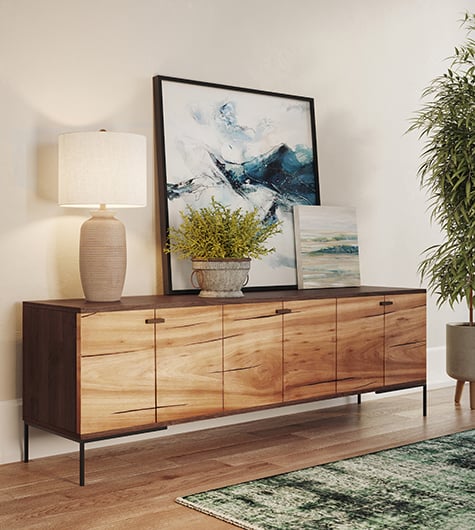
A rug should complement your room by offering contrast to the "big picture" aesthetic. Look at your existing furnishings, art, and wall color. Does your couch have bold upholstery? Are your walls a bright color or accented with vibrant photography? If so, a neutral rug or one with tone-on-tone texture may be best. If your sofa and accent chairs have light linen fabric and simple black-and-white paintings adorn the wall, a bolder rug that plays up your favorite colors and patterns can be a great option. But these aren’t strict interior design rules. Going wholly bold or completely neutral (from your decor on down to the rug) can make a living room really sing. Go with your gut on this one!
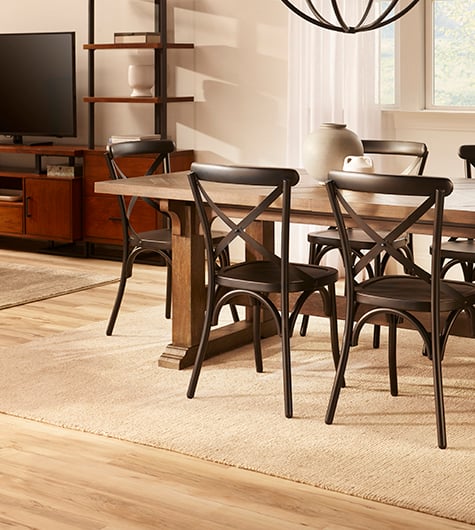
In addition to enhancing or adding color, texture, and warmth into a space, area rug placement can help define a "zone." For example, your home may contain a dining room and an adjacent living room. Placing one rug beneath your dining room furniture and a second rug beneath your living room furniture can tie each separate space together and set them apart visually from one another. An area rug can also be placed between two sofas to create a conversation zone that is enhanced by the face-to-face seating arrangement.
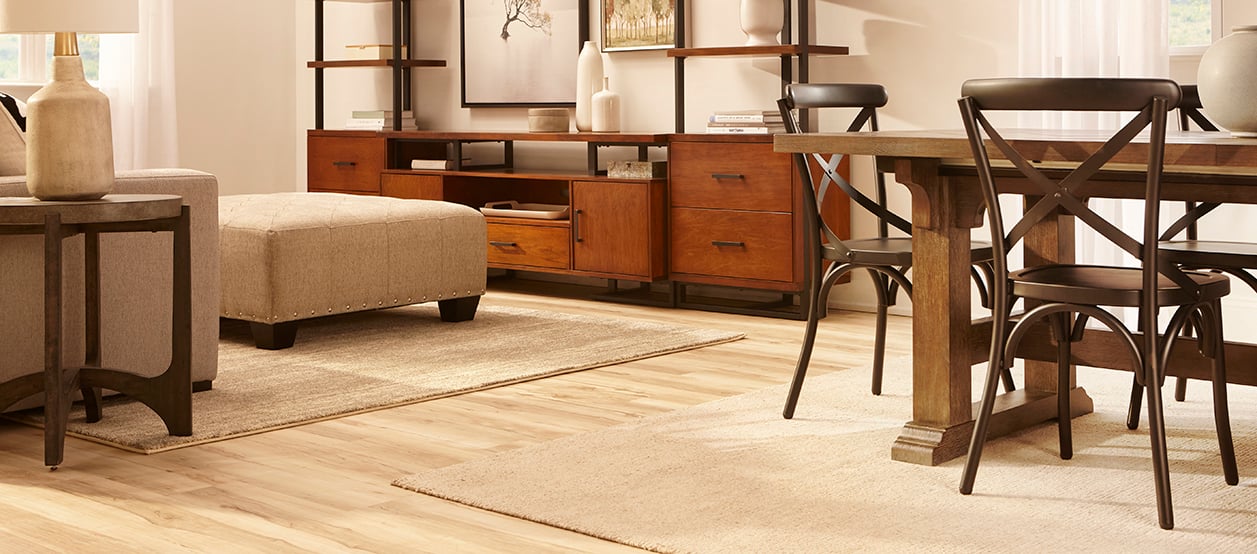
Featured Area Rug: WESLEY

A rug’s size should be dependent on your furniture arrangement, not the other way around. One decision you’ll have to make, though: Do you want all furniture legs on the rug, or just some? Rugs can help anchor furniture to the floor and prevent sofas or chairs from slipping on hardwood or laminate. Having all legs on an area rug also ensures stability — you won’t have any off-balance furniture pieces. But maybe you don’t have the space for a larger rug. Having just front legs on an area rug is an aesthetic that can work, especially with larger coffee tables and rugs that are 8 x 11 or smaller. A larger living room should be able to accommodate a 10 x 13 rug, allowing you to place all furniture legs on the rug. There are some cases where all legs, except for the coffee table, can live off the rug. For sizes 5 x 8 or smaller, it may be preferable to keep all legs off the rug, making the coffee table the centerpiece and allowing for a more spacious feel. As for the placement of other furniture pieces, such as bookcases and end tables, use your best judgment. Maybe your floor lamp works best just behind your accent chair and completely off the rug, while your entertainment center is best situated completely on the rug. Just be sure that everything is sturdy; some larger items can be wobbly on a thicker rug.

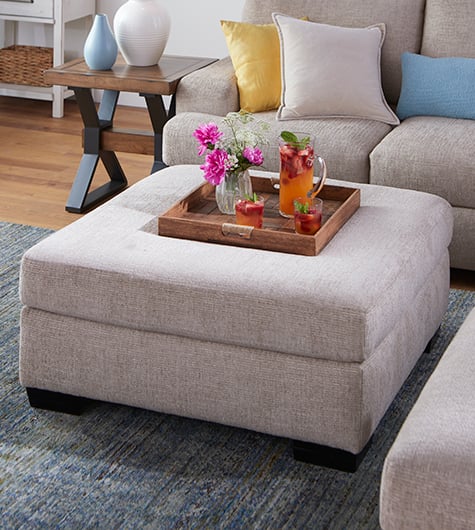
Large sectional sofas tend to pair well with large area rugs, and vice versa. An oversized area rug that fits under your entire sectional, as well as other complementary living room furniture, is a popular choice. In terms of placement, it’s often a no-brainer to line up the corner of your rug with the corner of your sectional. You can also choose to place the sectional only partially on the rug, ensuring that all front legs are on it. This is a smart choice when a sectional is in a corner or up against a wall. If you’d prefer all legs stay off the rug, you can place a rug under just your coffee table, ensuring that you leave equal space between the sectional and area rug on all sides that run parallel.
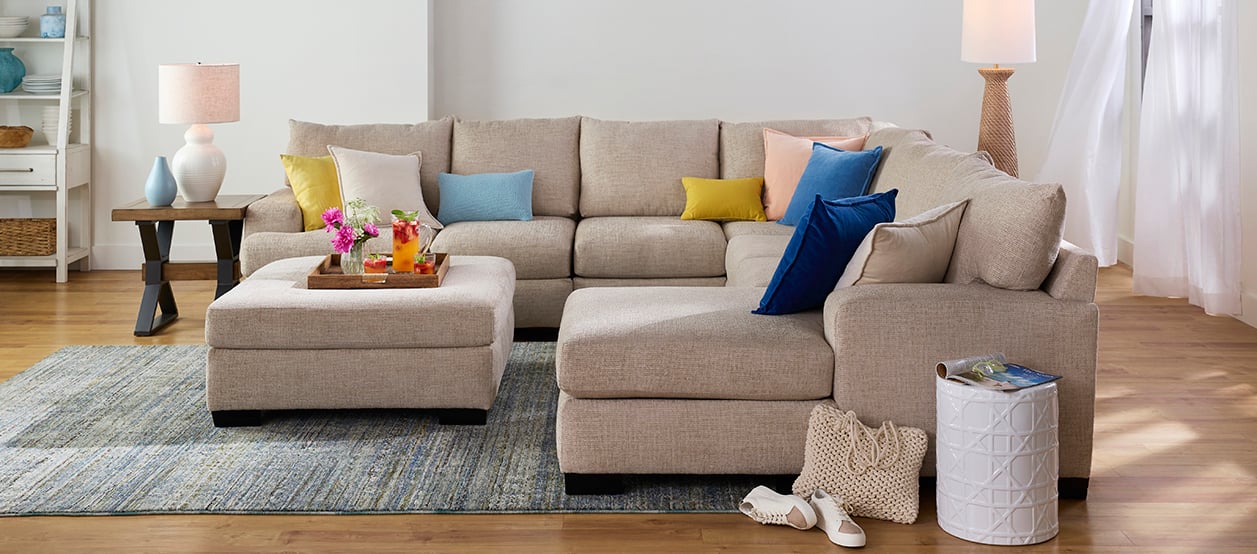
Featured Rug: REED